
Wild Garlic Season: Are You Making the Most of It?
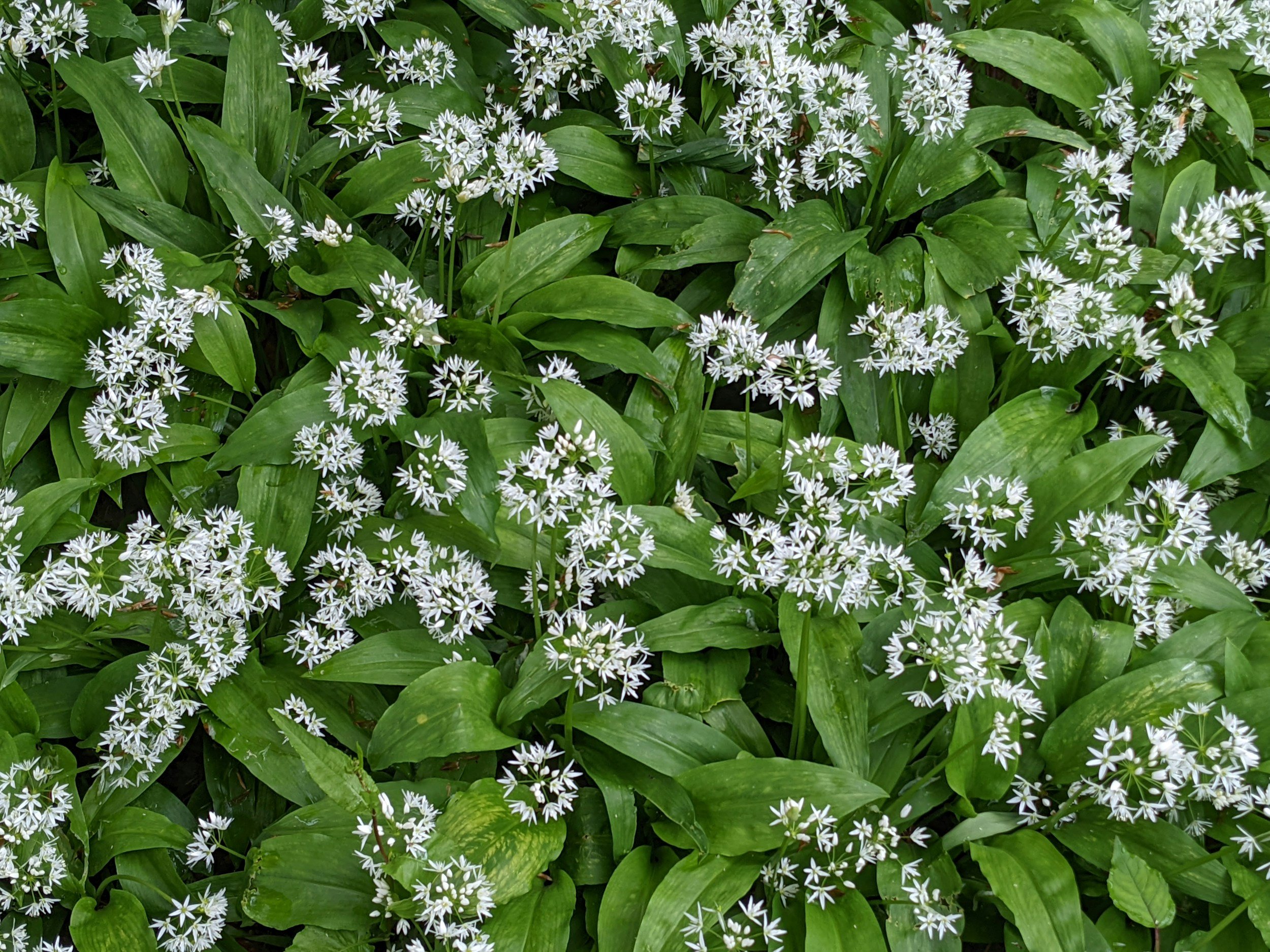
There’s a particular moment in the British food calendar that feels like a quiet celebration of spring - when wild garlic appears.
Found carpeting woodland floors, its vibrant green leaves and unmistakable aroma signal a shift in the season. For those who love to cook, it’s an invitation: to get outside, to forage (responsibly), and to bring something fresh, fragrant and fleeting into the kitchen.
Wild garlic season is short- typically March to May- so making the most of it is part of the joy. We spoke to Dame Tara Fraser, owner of Ashley Court, for a few simple ways to embrace it at home.
WHAT MAKES WILD GARLIC SO SPECIAL?
Wild garlic (also known as ramsons) offers a softer, greener garlic flavour—less pungent than cloves, but wonderfully aromatic. It’s incredibly versatile and works across everything from simple suppers to more celebratory dishes.
As Tara notes, “It’s one of those ingredients that instantly lifts a dish—fresh, bright, and full of life after the heavier months.”
Flowers
Wild garlic flowers can be pickled like capers while still in bud but look beautiful as an edible decoration on salads.
Wild Garlic Pesto
Wild garlic on its own in a pesto can be too pungent especially very early in the season. It can taste more balanced combined with some other herbs or greens. You could use spinach leaves or chard leaves for this. We mix and handful of parsley or of ground elder (of which we have plenty!) with two large handfuls of wild garlic leaves, washed and dried in a salad spinner. sprinkle with about a teaspoon of salt, some black pepper, a small handful of lightly toasted hazelnuts, pumpkin or sunflower seeds and about 100g of pecorino or parmesan cheese (or vegan equivalent).
A little lemon juice and/or grated lemon zest adds a bright note to the vegetal green base. Add a few good glugs of olive oil or another cold pressed vegetable oil and blitz the lot in a blender for a few seconds so it is still has a bit of texture and is not totally smooth. Adjust with more salt, lemon or oil as needed. Put into sterilised glass jars with a slick of oil on top and this will keep well in the fridge for about 10 days or more. It also freezes well. You can freeze it in ice cube trays so it is in small portions.
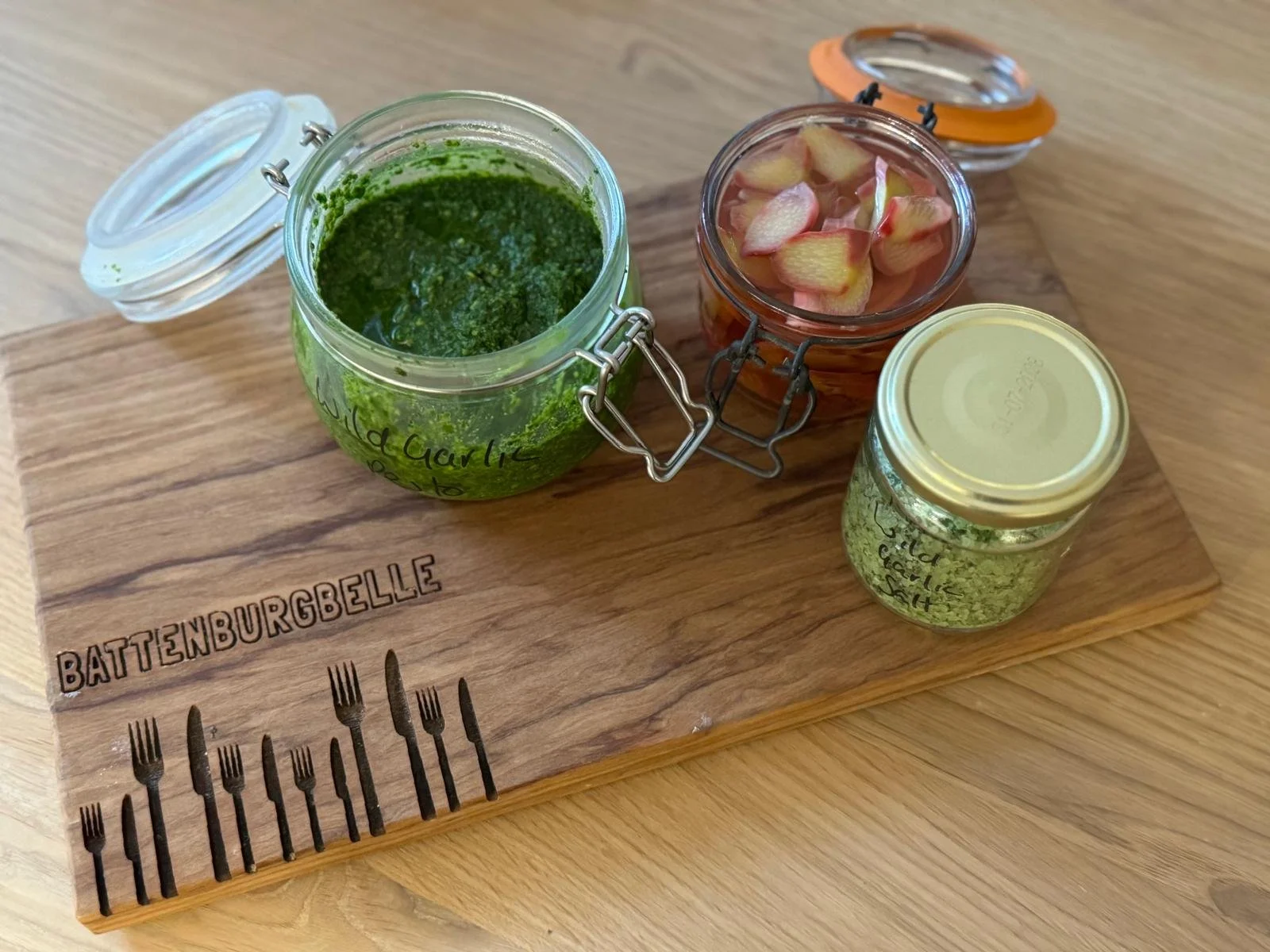
Dame Cathy Sloman’s wild garlic pesto made from Dame Tara’s wild garlic crop
Coddled Eggs with Wild Garlic
If you have one of those decorative egg coddlers and never use it, now is your chance! If you don’t have one you can cook the eggs in a ramekin instead.
Butter the inside of the coddler. Put a dessertspoon of cream or cream cheese in the bottom. Crack one or two lovely organic eggs into it. Add a few slivers of finely sliced garlic leaves, salt and pepper and screw on the lid. Place the coddler in a pan of boiling water to come about three quarters of the way up, if using ramekins put a lid on the saucepan and cook for 7-10 minutes for a single egg, slightly longer for two eggs, you can check to see if the eggs are cooked to your liking. Carefully remove the coddler or ramekin from the pan using tongs. Serve with some good toast.
Wild Garlic Salt
You can use a 500g packet of either sea salt or rock salt for this. Whizz approximately 70g of wild garlic leaves with about the same weight of salt into pulp in a blender. Then mix the rest of the packet of salt in by hand which gives a nice sort of slightly marbled effect. Spread it out thinly on a tray to dry overnight. (We leave it on the top of the Aga to dry out for a couple of hours.) Then pack into jars and label. It stays good indefinitely and is a great way to add a garlicky punch to salad dressings, sauces, grilled vegetables, cheese on toast, baked potatoes and countless other things.
Ashley Court Bonne Santé Soup
At the very start of the growing season we have wild garlic, young nettles, ground elder appearing in the woods and gardens. Make a soup base using onions or leeks with a little celery, potato (or rice) and a good vegetable stock, cook well and blend until smooth. Gather a large colander full of nettle tops and wild garlic. Add a couple of handfuls of ground elder or flat leaf parsley. Wash and then finely chop in a food processor (or by hand but use gloves because of the nettle stings), add the chopped herbs to the hot soup base, give it a good stir, add a big squeeze of lemon juice. You can add a little swirl of vegan cream to the soup and a few drops of Wild Garlic oil, which looks beautiful.
OUR TOP TIPS
Keep it simple
Wild garlic doesn’t need much to shine. Fold it through butter, stir into soft cheeses, or blitz into a pesto with nuts, lemon and olive oil.
Use it fresh
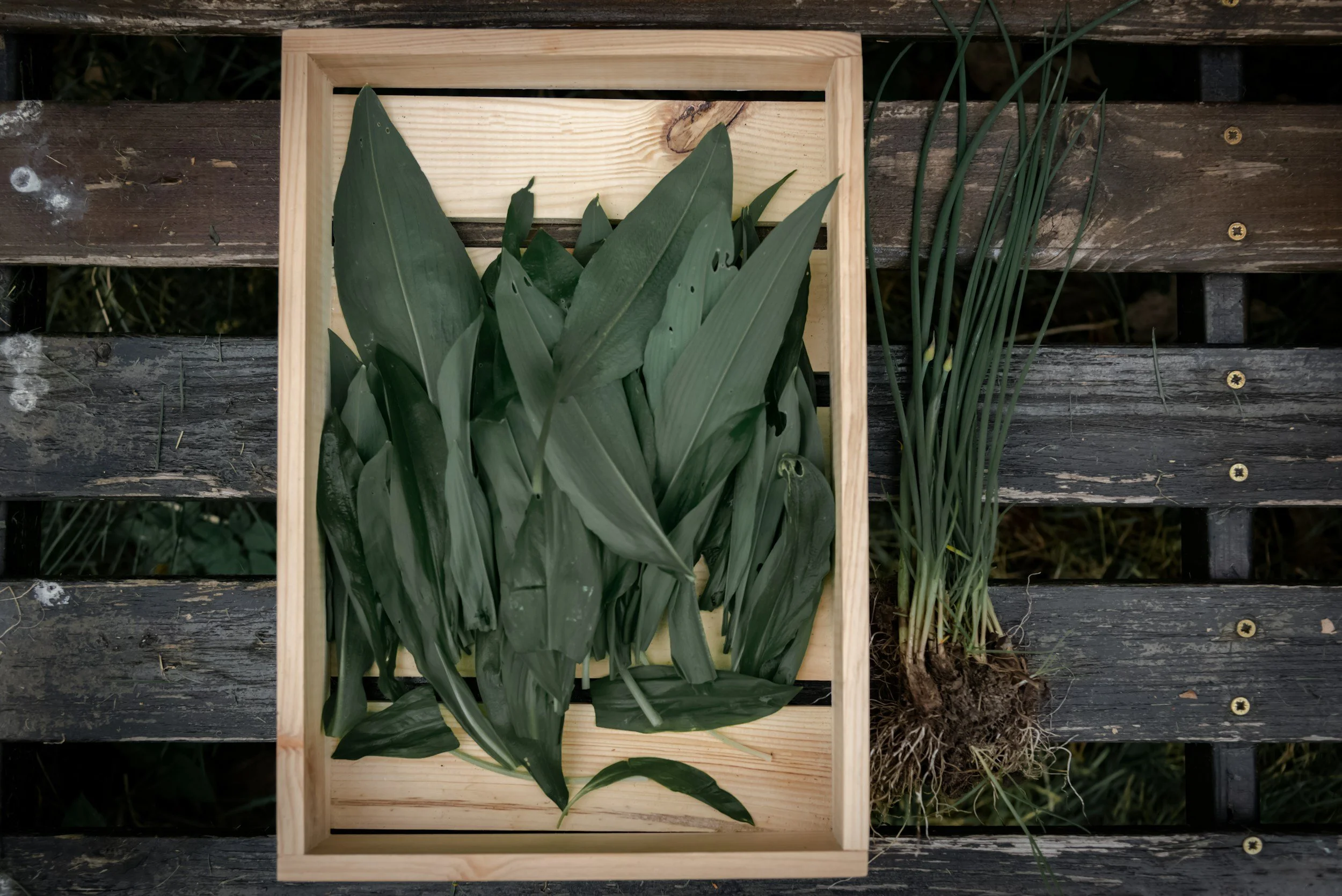
The leaves are best used soon after picking. If you do need to store them, wrap in a damp cloth and keep in the fridge—but aim to use within a couple of days.
Forage thoughtfully
If you’re picking your own, make sure you’re confident in identification (it has a distinctive garlic smell) and always follow responsible foraging practices—taking only what you need and leaving plenty behind.
RECIPES TO TRY AT HOME
Cheddar, swede and wild garlic scones
Wild garlic risotto
Wild garlic filo pile
A MOMENT WORTH SAVOURING
Part of what makes wild garlic so special is its brevity. It arrives, transforms menus and kitchens for a few short weeks, and then disappears again.
Perhaps that’s why it feels so joyful—a reminder to cook with the seasons, to notice what’s around us, and to make the most of it while we can.
If you do try one of the recipes, we’d love to see—tag us and share your creations with the LDE London community. Because when we share food, we share knowledge—and that’s where real connection happens.
